
Portfolio
This page compiles seven assignments that embody the department’s learning goals and literacies. These assignments range from term papers to oral presentations, each highlighting my journey as an aspiring classicist.
Assignments
May 2023
Exploring Rome
TX200A
Professors Curley & Spinner
Learning Goals:
• Conduct research by traditional and digital methods
• Present orally and in written form an argument supported by primary and secondary sources
Literacy:
• Oral Communication
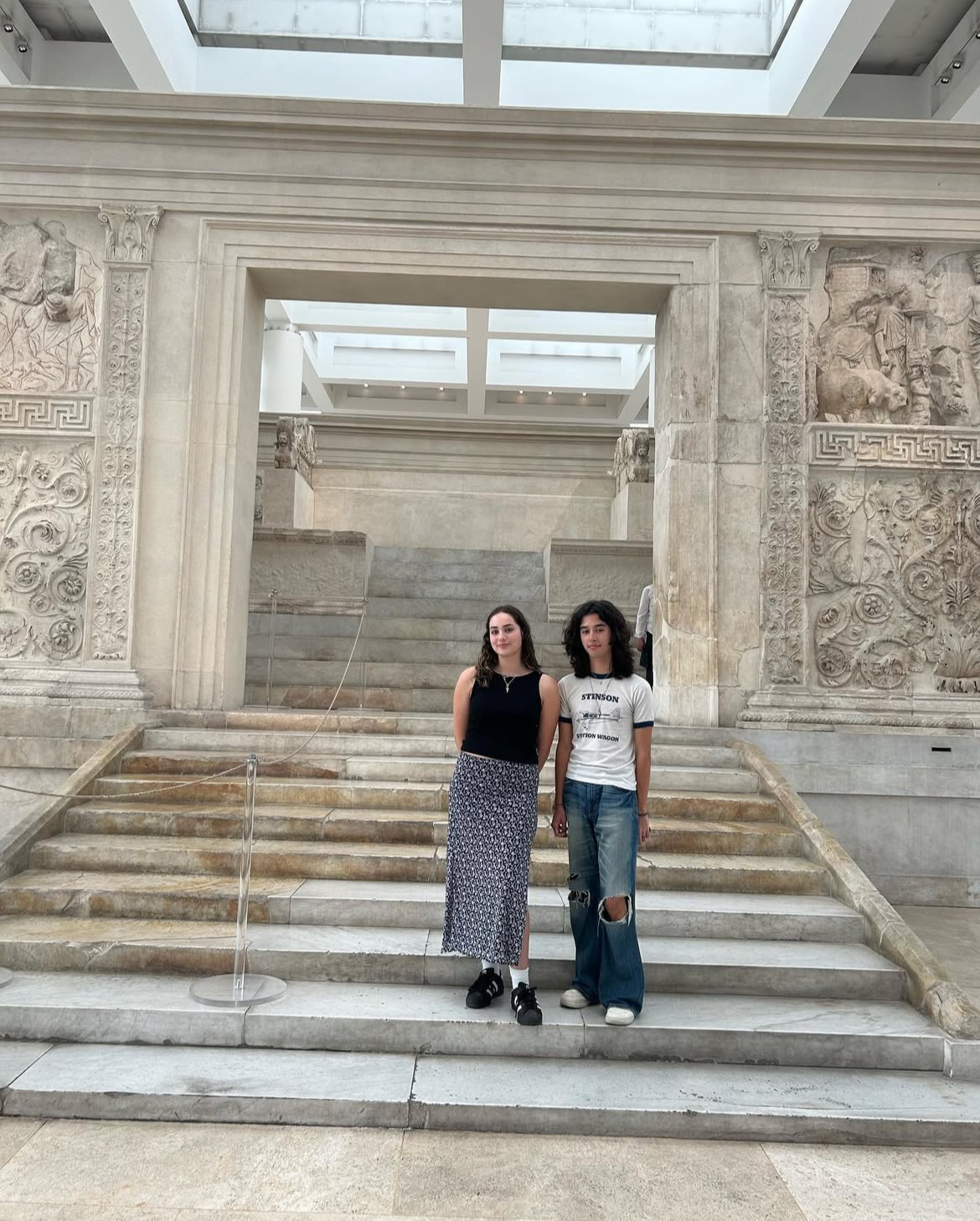
The Ara Pacis Augustae
In Professor Curley and Spinner’s travel seminar, Exploring Rome, each student was tasked with crafting an oral site presentation to be given in Rome. My partner, Sylvie Ziefert, and I created a presentation on the Ara Pacis Augustae, an Augustan monument to peace and prosperity ushered in by Augustus. We decided to break the presentation into distinct sections: first, an art-historical visual analysis of each discrete part of the altar, such as the friezes, construction, and the altar itself. We then provided context on the monument, like Augustan propaganda, other Augustan monuments, comments from ancient authors, and earlier inspirations. Finally, we explained the fate of the altar in the modern era: the excavations, Mussolini’s involvement, roots of fascism, the concept of weaponizing antiquity, gentrification, and its current resting place at the Ara Pacis Museum. This assignment is directly related to the course’s themes and goals, with a strong emphasis on the evolution of Rome’s topography, politics, and culture. As a first-year and budding classicist, this project was foundational to my perception of the field and the kind of work that would be expected of me on my journey at Skidmore. My partner and I were determined to prove ourselves as newbies and produce a polished, well-rounded presentation, as well as make the most of this once-in-a-lifetime experience. In our determination, we created a successful presentation that enhanced our experience and hopefully our classmates’ experiences as well. If I could do this experience over, however, I would have integrated more ancient sources to elucidate the opinions on the altar by contemporaries of Augustus.
Nov 2023
The Body and Soul in Ancient Greece
CC265
Professors Sadarananda & Oh
Learning Goals:
• Present orally and in written form an argument supported by primary and secondary sources
• Develop multi- and cross-cultural perspectives and apply them to gender, ethnic, and social issues
Literacy:
• Technology
Ethics of Archaeology: ASCSA Agora Excavations
In the travel seminar, The Body and Soul in Ancient Greece, our class was tasked with recording a podcast on a given topic relating to the material of the course. My group, Liv Mollo, Jacob Mejia-Levy, Amanda Denney, and I selected the topic of the ASCSA excavations of the Athenian Agora. We chose this topic because we were all interested in the history of the excavations, particularly the acquisition and destruction of the Vrysaki neighborhood. In the podcast, we primarily discussed the neighborhood, which was low-income, and the ethics of displacing its inhabitants. This assignment was good preparation for presenting on sites and their history in an oral format, as well as collaborating on a larger project with classmates. We encountered issues with audio equipment, scheduling, and keeping everyone on schedule, but in the end, we were able to produce a thorough and nuanced take on the subject. At this point in my academic career, I had never made a podcast, giving me a taste of a new way of presenting information. I enjoyed the conversational aspect of the podcast, combining my research with my own opinions and responding to my groupmates as well. This project forced me to think critically about the ethics of archaeology and the unspoken history of many sites like the Agora. I was able to take this perspective into account in my Ancient Wood: The Furniture of Tumulus MM paper, as the original director, Rodney Young, engaged in unethical practices at Gordion. If I were given the opportunity to do this project over again, I would have tried to encourage more collaboration earlier in the process. In the end, it felt like we were rushing to mesh our research together, with some parts of the podcast feeling underdeveloped. Overall, however, this assignment was successful in preparing us to research our site presentations alone and collaboratively.
Dec 2023
Materials, Making, and Meaning in the Ancient Mediterranean
CC365
Professor Sadarananda
Learning Goals:
• Read and analyze historical documents within their social contexts and evaluate the role of the individual in ancient cultures
• Conduct research by traditional and digital methods
Literacy:
• Technology
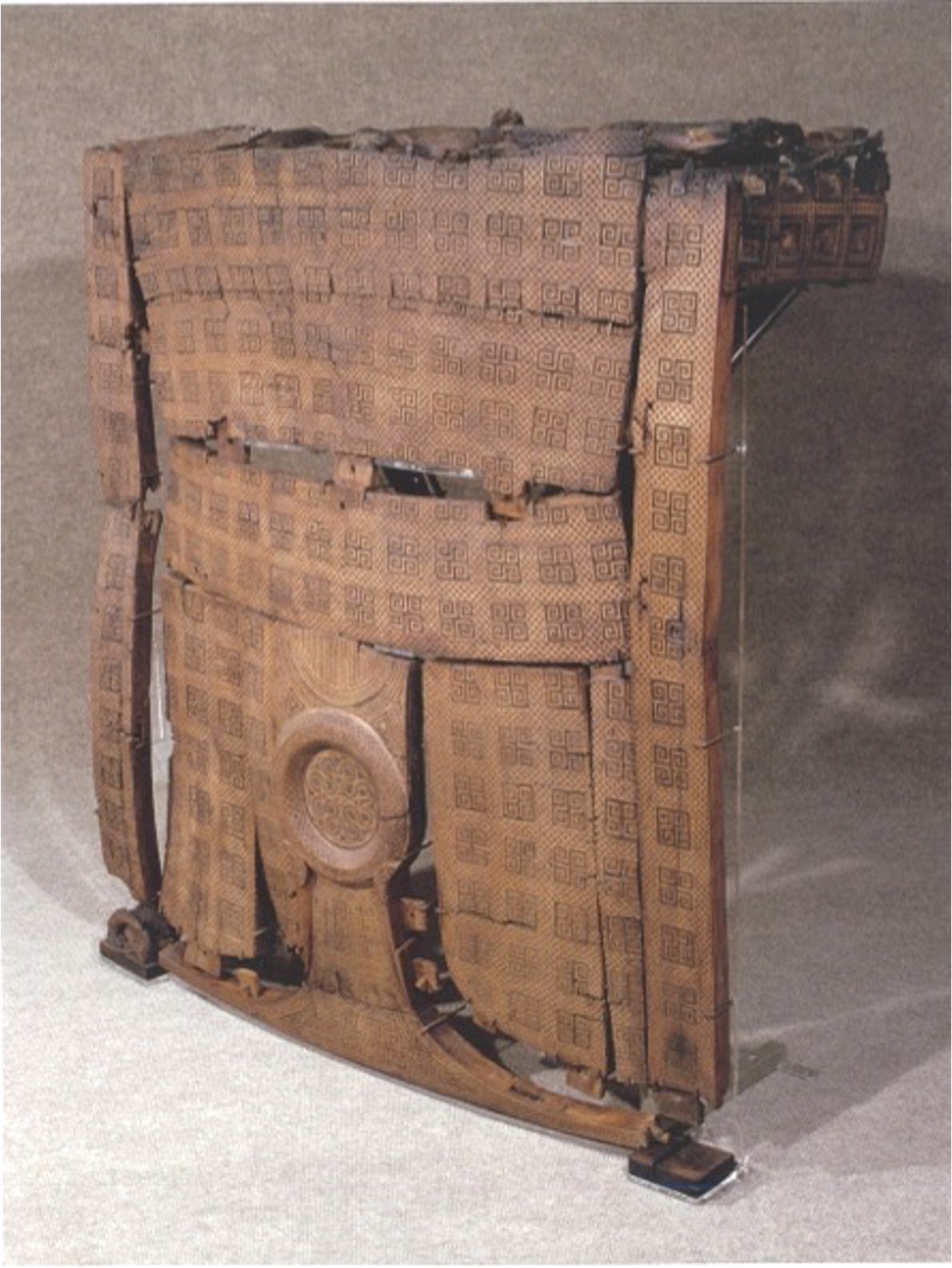
Ancient Wood: The Furniture of Tumulus MM
This assignment was the final research project for the class Materials, Making, and Meaning in the Ancient Mediterranean. I chose the topic of wood as an ancient material, how it is studied today, and the case study of the furniture assemblage at Tumulus MM, Gordion, Turkey. In this paper, I examined the Chaîne Opératoire of woodworking and carpentry, and the holes in scholarship on the topic. Specifically, I wrote about the logging and finishing processes, as little is known about the procedure’s intermediate steps. I also analyzed the history and construction of the tumulus, types of furniture contained within, and the weathering process attributed to the condition the furniture is currently in. In the process of conducting any research paper, a critical analysis of modern scholarship is required. I drew major context and ideas from primary and secondary sources, such as the known information about the furniture assemblage, wood degradation, and ancient logging practices. It is also important not to take these words at face value, but to incorporate original ideas and novel interpretations. This assignment was seminal in the formation of my academic and professional trajectory. I have never been more interested and passionate about an assignment before, and I am excited to continue doing work like this in the future. If I could do it over again (which I will for my senior capstone), I would incorporate some of my original Greek translation and interpretation, as this skill was not in my toolbox at the time. If the limits were endless, I would have also really liked to include some kind of experimental archaeology aspect, like artificially degrading wood in a lab. Holistic, interdisciplinary research in this field is the future, so I am eager to get the ball rolling.
Jan 2024
The Body and Soul in Ancient Greece
TX200A
Professors Sadarananda & Oh
Learning Goals:
• Read critically and analyze closely literary texts and modern scholarship
• Identify and assess selected artifacts and monuments within their cultural contexts
Literacy:
• Oral Communication
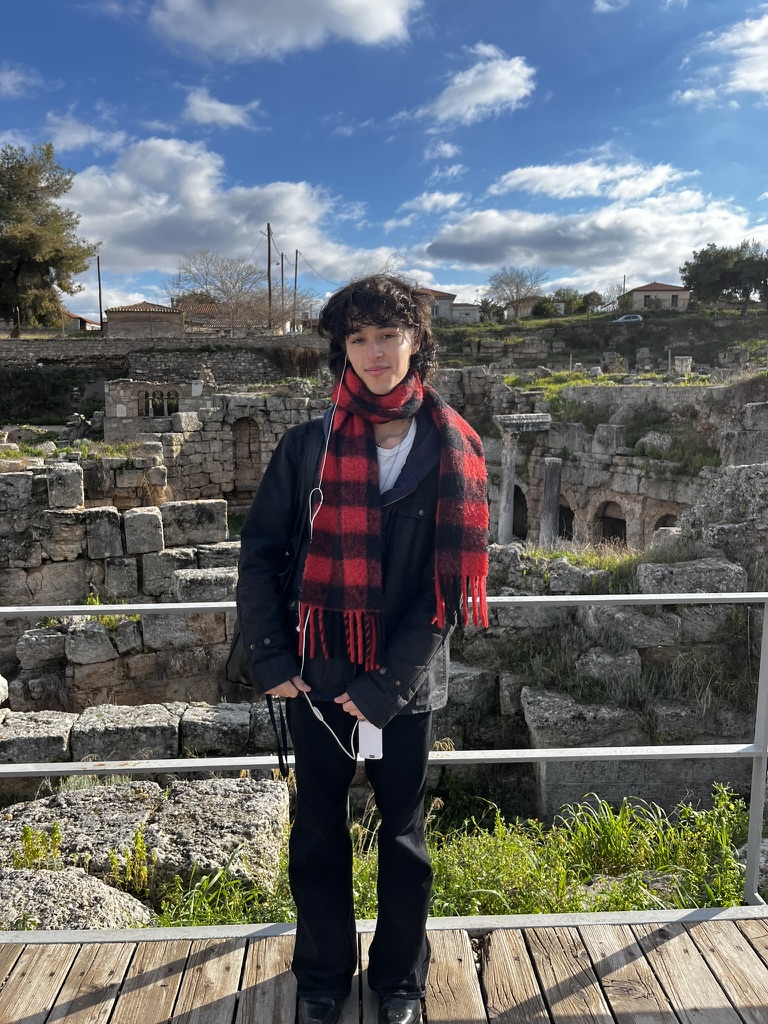
Site Presentations: Peirene Fountain & Monastery of Hosios Loukas
Following the in-class portion of the course, The Body and Soul in Ancient Greece continued in Greece. Structured similarly to Exploring Rome, our class travelled across mainland Greece, stopping at important sites pertaining to religion and material culture. Unlike my previous travel seminar experience, we were assigned two sites to present on— one solo and one in a pair. These sites were assigned at random, allowing us to research unfamiliar topics. I was assigned the Peirene Fountain in Corinth for my solo presentation, and the Monastery of Hosios Loukas for the pair presentation with Melina Mendez. I had not heard of either site before, so I was excited to learn more. In my presentation on Peirene, I explained the city’s history and dove into ancient literature on the fountain. I leaned into this type of source because I felt like that was the only missing piece of the Ara Pacis presentation. Since then, I have come to greatly appreciate the intertwinement of material culture and ancient primary sources. In our Hosios Loukas presentation, we divided the talk into the main church and the crypt, each focusing on the art and architecture of its respective spaces. This site was exciting to research since it was constructed in the Byzantine era, with Christianity influencing its design. These projects and this travel seminar cemented my love for Greek art and archaeology and introduced me to modern Greek culture. When I went to the Eastern Boeotia Archaeological Project that summer, I was much more appreciative of Athens, with a broader understanding of the city and its sites, thanks to this course.
Apr 2024
Materials, Making, and Meaning in the Ancient Mediterranean
CC365
Professor Sadarananda
Learning Goals:
• Identify and assess selected artifacts and monuments within their cultural contexts
• Assess and present scholarship of a theoretical nature and apply theory to both primary and secondary sources
Literacy:
• Visual
Parilia Conference: The Furniture of Tumulus MM and the Mystery of Ancient Wood
In the spring after I wrote the ancient wood research paper, I was invited to present my work at the Parilia conference hosted by Hamilton College (that year). It felt amazing to have my hard work recognized and be able to share that work with my peers and professors from other institutions. I presented my research in the form of a poster, dividing my paper into sections based on subtopics and including relevant images from the paper’s figures. Although this “assignment” was not a requirement of a course, it extended the work that I did in Professor Sadarananda’s Materials, Making, and Meaning class. This project helped me practice poster-making skills that I employed in preparation for conferences in my other field, biology, oral presentation, and networking skills. I achieved the goals of this project, effectively presenting my work in a visual and oral format, along with answering questions from attendees.
Apr 2025
Sightseeing with Pausanias
CG311
Professor Sadarananda
Learning Goals:
• Read Greek and Latin prose and poetry within their larger cultural and historical settings
• Develop multi- and cross-cultural perspectives and apply them to gender, ethnic, and social issues
Literacy:
• Information
A Sophisticated Approach to Time
In my first Greek language seminar, our class read Pausanias’ Description of Greece. A couple of topics of discussion that often came up were Pausanias’s use of time and chronology, and his motivations for writing in such a unique style. One common approach was that he was subverting Roman imperial power through his conventions, but in my paper, I claimed that this was not the case. Instead, I argued that Pausanias, as an elite member of Roman society (albeit a provincial elite), would not try to subvert a system that was working in his favor. I also highlighted that Pausanias comes from the Second Sophistic, a period known for its connection between elite competition and learnedness. In his Description of Greece, he uses novel timekeeping methods and other unconventional literary devices to display his position in society and level of intelligence. This assignment required that I incorporate my own translations of the original Greek, which was a new task for me. I had produced translations for class activities, but never for use in a research paper. Arguing against other scholars’ research was also a new approach for me, which I found to be an effective way to form an argument. Although this method served me well, if I could do it over again, I would lean less into tearing the other argument down. My main argument was that Pausanias was indifferent to the actions of the Roman Empire, but by countering existing arguments, I think I went a little too far in the other direction.
Dec 2025
Seminar in Greek Poetry: Lysistrata
CG310
Professor Aghababian
Learning Goals:
• Read Greek and Latin prose and poetry within their larger cultural and historical settings
• Assess and present scholarship of a theoretical nature and apply theory to both primary and secondary sources
Literacy:
• Information
That's What She Said: The Progression of Translations of Lysistrata
This semester, I am taking Professor Aghababian’s Greek poetry seminar on Aristophanes’ Lysistrata. Like other language seminars, we read and discuss an ancient text and write a final research paper on a related topic of our choosing. I chose to write about the progression of translations of Lysistrata, specifically about the progression of profane language use. This paper is still in progress, so I am in the process of analyzing translations, secondary scholarship, and formulating my arguments. This assignment is particularly unique in my experience as a classics major. I have never written a research paper on reception, but so far, this experience has been rewarding. I am drawing conclusions on ancient and modern conceptions of obscenity and feminism, which fit in well with the themes of the course. Although it is still in progress, I can tell that this paper will shape my perception of ancient comedy and reception studies.